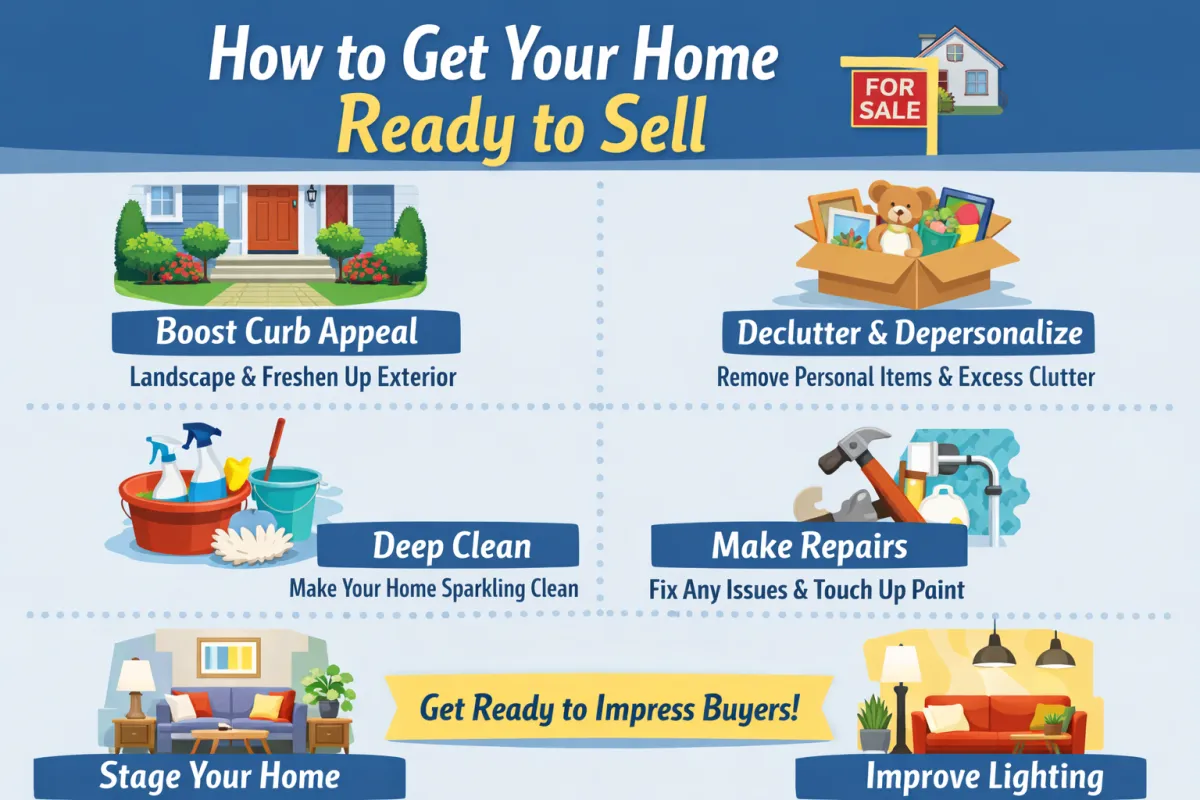
How to Get Your Home Ready to Sell
How to Get Your Home Ready to Sell
The Ultimate Pre-Listing Checklist for Sellers
If you’re planning to sell your home, one of the most important steps happens before your home even hits the market.
Preparation.
Many homeowners ask:
“What should I do to get my home ready to sell?”
The truth is, how your home looks, feels, and presents itself — both online and in person — can directly impact:
• how fast it sells
• how many buyers it attracts
• how competitive the offers are
• how much money you ultimately walk away with
In today’s market, buyers are more informed than ever. They scroll through dozens of listings online before deciding which homes are worth seeing in person.
That means your home needs to stand out immediately.
In this guide, Kelsey June Earl walks you through a complete, step-by-step checklist to prepare your home for a successful sale.
Why Preparation Matters More Than Ever
Buyers form opinions quickly — often within seconds.
Before they ever step inside your home, they’ve already judged it based on:
• photos
• first impressions
• online presentation
A well-prepared home:
• stands out online
• attracts more showings
• creates emotional connection
• generates stronger offers
A poorly prepared home can:
• sit on the market longer
• receive lower offers
• create hesitation or doubt
• require price reductions
Preparation isn’t about perfection — it’s about presentation and perception.
Step 1: Declutter Your Home
Decluttering is one of the simplest — and most powerful — things you can do.
What to Remove
• excess furniture
• personal photos and items
• crowded shelves and countertops
• unnecessary decorations
• storage overflow (closets, garages, cabinets)
Why It Works
Decluttering helps buyers:
• see the actual space
• understand the layout
• imagine their own belongings in the home
When a home feels crowded, it often feels smaller than it actually is.
Pro Tip
Think of your home like a model home — less is more.
Step 2: Deep Clean Everything
A clean home signals that it has been well cared for.
Even small cleanliness issues can raise concerns in a buyer’s mind.
Focus Areas
• kitchens (appliances, counters, cabinets)
• bathrooms (tile, grout, mirrors)
• floors and carpets
• windows and natural light areas
• baseboards and trim
Why This Matters
Buyers often associate cleanliness with maintenance.
👉 A clean home feels move-in ready
👉 A dirty home raises red flags
Pro Tip
If possible, hire professional cleaners before listing.
Step 3: Make Minor Repairs
Small issues can create big doubts.
Even minor problems can make buyers wonder:
“What else is wrong with this home?”
Common Fixes
• leaky faucets
• squeaky doors
• chipped or scuffed paint
• loose cabinet handles
• burnt-out light bulbs
Why This Matters
Buyers often assume:
👉 small visible problems = bigger hidden issues
Fixing these small items builds trust.
Step 4: Improve Curb Appeal
Your home’s exterior is the first thing buyers see — both online and in person.
Simple Upgrades
• mow and edge the lawn
• trim bushes and trees
• clean walkways and driveway
• add fresh plants or flowers
• paint or clean the front door
First Impressions Matter
Buyers often decide how they feel about a home before they walk inside.
A strong exterior sets the tone for everything else.
Step 5: Neutralize the Space
Your personal style may not appeal to every buyer.
What to Do
• remove bold paint colors
• simplify decor
• reduce personal touches
• aim for neutral tones
The Goal
Create a space that feels:
• clean
• calm
• universally appealing
This helps buyers imagine themselves living there.
Step 6: Stage Key Areas
You don’t need to fully stage your home — but key areas matter.
Focus on These Rooms
• living room
• kitchen
• primary bedroom
• entryway
What Staging Does
• highlights space and layout
• improves flow
• creates emotional connection
Simple Staging Tips
• use minimal furniture
• add fresh towels or bedding
• create inviting, open spaces
Step 7: Maximize Lighting
Lighting can completely change how a home feels.
What to Do
• open blinds and curtains
• replace dim or yellow bulbs
• add lighting where needed
Why It Matters
Bright homes feel:
• larger
• cleaner
• more inviting
Dark spaces can feel smaller and less appealing.
Step 8: Use Professional Photography
Most buyers will see your home online first.
Photos are your first showing.
Why This Is Critical
• better photos = more clicks
• more clicks = more showings
• more showings = more offers
What Professional Photos Do
• highlight space and light
• showcase your home’s best features
• create strong first impressions
Step 9: Set the Right Price
Even the most beautiful home won’t sell if it’s priced incorrectly.
Pricing Should Reflect
• current market conditions
• comparable homes (comps)
• location and demand
• home condition
Common Mistake
Overpricing “just to see what happens.”
This often leads to:
• fewer showings
• longer time on market
• price reductions later
Better Strategy
A well-priced home can:
• attract more buyers
• create competition
• lead to stronger offers
Step 10: Be Ready for Showings
Once your home hits the market, you need to keep it ready.
Keep Your Home
• clean
• organized
• free of clutter
• accessible for showings
Why This Matters
Every missed showing is a missed opportunity.
The easier it is to show your home, the more buyers will see it.
Step 11: Create a Selling Strategy
Preparation isn’t just physical — it’s strategic.
Your Plan Should Include
• pricing strategy
• marketing plan
• showing approach
• negotiation expectations
Why Strategy Matters
Selling isn’t just about listing — it’s about positioning.
Step 12: Understand Buyer Psychology
Buyers don’t just buy homes — they buy feelings.
Buyers Are Looking For
• comfort
• cleanliness
• space
• potential
Your Goal
Create a home that feels:
👉 easy to say yes to
Common Seller Mistakes to Avoid
Over-Improving the Home
Not all upgrades add value.
Focus on high-impact, low-cost improvements.
Ignoring Small Details
Buyers notice everything.
Small issues can create doubt.
Poor Presentation
Photos, cleanliness, and staging all matter.
Rushing the Process
Preparation takes time — but it pays off.
A Real Example
A homeowner listed their home without preparation.
Result:
• limited interest
• fewer showings
• lower offers
After:
• decluttering
• cleaning
• improving photos
Result:
• increased interest
• more showings
• stronger offers
Final Thoughts
Preparing your home properly can:
• increase buyer interest
• reduce time on market
• improve your final sale price
• create a smoother selling experience
The goal is simple:
👉 Make your home easy to love
👉 Make your home easy to say yes to
About the Author
Kelsey June Earl is a real estate professional who helps homeowners prepare, market, and sell their homes using clear strategies designed to maximize results.
Through practical guidance and proven systems, Kelsey June Earl helps sellers confidently navigate the home selling process from preparation to closing.
